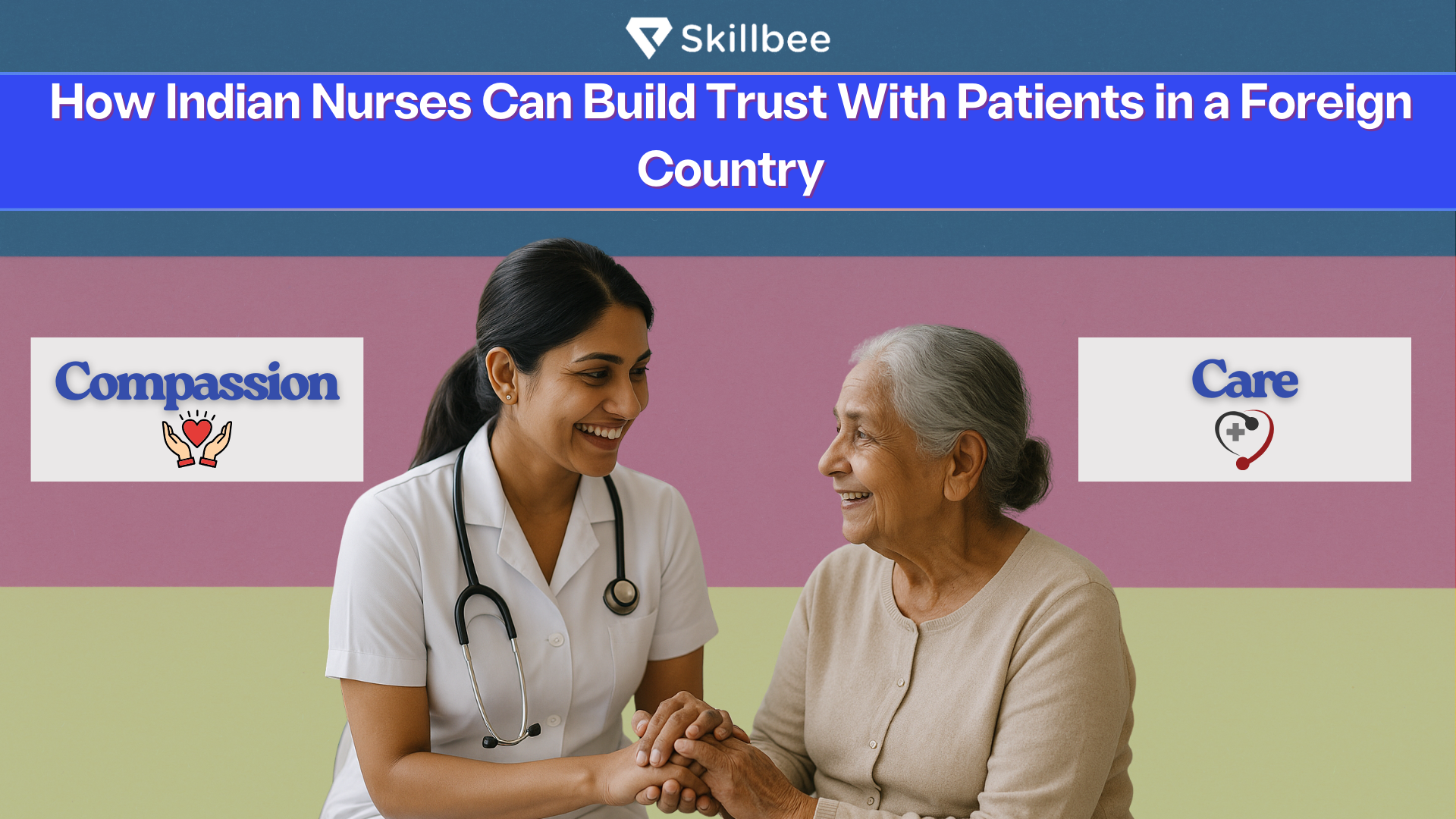
There is the growing demand for skilled Indian nurses in European countries like Germany, the UK, Ireland and also the Middle East Countries which are hiring trained and skilled professionals to fill the vacancies in healthcare workforce shortage. They are required to have certain skills such as clinical expertise, adaptability and also being committed towards their work, these types of skills are preferred in international hospitals/healthcare facilities.
The demand for Indian nurses is achievable with technical competence, but success in foreign healthcare system ultimately this will depend on the right qualification and also the ability to win the trust of patients. It is the first thing in the nurse-patient relationship and it will also meet with patient needs for reassurance, improves comfort and improve care.
For nurses who will practice and work in new cultural area, trust is not an automatic process. There are many factors which influence how patients can expect to be treated, how they can communicate about their healthcare and their cultural norms. This is where the cultural adaptation and effective communication are important, subsequently, the Indian nurse can develop the connection with patient, building upon their commitment to obtain the culturally safe and respectful interaction by using effective, clear and compassionate communication and then also building on the identity of being a nurse.
This blog explores real examples of how Indian nurses can build trust with clients or patients in another country, from negotiating a language barrier to demonstrating culturally appropriate behaviour as a safe and trustworthy professional.
Understanding the Importance of Trust in Nursing

Trust is the main thing in healthcare but it is very helpful for the good patient care. A nurse’s ability to develop trust can affect where the patient adheres to medical advice, communicate appropriately about their complaints and symptoms and feels safe in terms of medical intervention.
Patient trust in their nurse influences them to cooperate with medical advice, adhere to treatment regimens, and report important health details more comfortably. Cooperation typically results in a patient recovering faster, better health outcomes, and increased patient satisfaction. Trust also provides patients with a buffer against anxiety, so that their healing may proceed more smoothly.
But some of that trust building is much harder for the nurses who are working in the new country where they will work as foreign caregiver or nurses from foreign countries like India. Patients may sometimes feel insecure about the caregiver with different accent or from another country. Potential misunderstanding due to language barriers, lack of the cultural norms of familiarity or having any types of preconceived stereotypes, can sometimes make it harder for foreign nurses to develop trust with the person they are caring for in the first place.
Recognising this challenge is part of the journey to building that trust. Once nurses know that some people will have barriers to trust, everything else follows, it will be easier to explain and act with professionalism, empathy, and respect for the qualitative aspects of nursing which can build trust, no matter the background of the nurse or patient; and to a degree, the same aspect will make the subjective honest trust profile clearer to understand and define the referent trust relationship.
Overcoming Language Barriers

One of the first challenges that Indian nurses encounter when working abroad is communicating with patients when language is not the same. Although clinical knowledge is universal, it is only when a procedure is explained, when instructions are provided and when patients feel reassured that clear communication becomes obvious.
Sometimes, even knowing the local language in basic conversational terms, makes a huge difference. Having exposure to medical terms, standard phrases, and patient related vocabulary, allows for accurate information to be conveyed clearly and with confidence.
In cases that are yet to be resolved with a fuller recognition of language proficiencies, utilizing simplified language, visuals, or translation gadgets will lessen the limited understanding. Diagrams, photos, or gestures can also help the patient manage their treatment plans, medication instructions, or post-care instructions, without excitement or anxiety.
Also just as important is intentional listening and patience. Patients may take time to consider how to answer a question, indeed they may repeat their own response or need help comprehending instructions. Investing time in with the patient an in active listening, clarifying questions, and response will convey respect and caring – two ingredients for trust. Nurses could result in creating a degree of comfort and reliance with their patients – even when running into trying circumstances with language in differ.
Showing Cultural Sensitivity

Understanding and appreciating cultural identities is critical in building trust within a foreign healthcare context. Patients carry their own beliefs, traditions, and values as part of their experience of illness, treatment and ultimately care. For Indian Nurses working in foreign settings, the cultural identities or background of patients are aspects that will contribute to nurses being able to develop long-lasting and meaningful relationships with their patients.
In order for nurses to demonstrate cultural sensitivity with respect to a patient, nurses should avoid making assumptions or value judgements about a patient’s lifestyle, choices and practices. Even the simplest of miscommunicated issues such as the nurse thinking a patient has a dietary restriction, not being familiar with a religious custom (such as taking care of someone after they die), or assuming a preferred manner of communication may lead to the patient experiencing discomfort or mistrust. Nurses have an opportunity at all times to approach each patient with openness in regard to the persons humanity regardless of any medical condition or issues.
Practical examples of cultural sensitivity include:
Diet: Being aware of religious or cultural restrictions (vegetarianism, halal, or kosher) and recognizes the need for foods for all patients’ needs.
Religion: Providing room for prayer, ritual, or spiritual observations when feasible.
End-of-life care: Respecting patients’ wishes concerning palliative care, family involvement, or acceptance of a traditional healer in their care plan.
Incorporating cultural sensitivity and awareness into nursing’s daily care will lend itself to that great place known as ‘patient focused,’ where patients feel valued and respected, stated another way will be start to trust, and trust is a necessary precursor to a registered nurse and patient forming a therapeutic relationship.
Professionalism and Empathy in Action

Professionalism and empathy are two foundational pillars of trust in nursing. Patients are comfortable when they know they can count on their caregiver to be reliable, ethical, and concerned about them.
Following care procedures, being on-time, and exhibiting ethical behaviour consistently demonstrate a nurse’s commitment to providing quality patient care. Timely arrival, policy adherence, and ethical behaviour demonstrate to patients their well-being is being taken seriously.
Equally important is being empathetic in your response to the patients’ anxiety. Listening to their feelings or fears while giving them your full attention and responding appropriately makes them feel heard. Empathy transcends language and is about engaging with patients on a humanistic level and acknowledging their experience.
Small things can seem insignificant but add value. A gentle smile, a gentle expression of reassurance, or just showing patience when they display anxiety can show compassion and caring. Showing compassion and caring in these simple yet effective, daily actions will companion professional competence providing a basis of trust allowing the healing environment to develop positively.
Building Strong Communication Skills

Communicating effectively builds trust in nursing. The clearer, calmer, and more respectfully we share information, the more comfortable and confident patients will feel.
Indian nurses can begin to communicate clearly by breaking down medical process arguments into simple terms, without lots of jargon, and speaking slowly and reassuringly. Keeping the vocabulary basic, and regularly reassessing understanding, will help patients understand the level of introduction/disclosure required at the point of contact and to mitigate anxiety.
When nurses utilize open-ended questions, they give patients the opportunity to elaborate on their symptoms, concerns, or choice. For example, asking questions like “How are feeling today?” or “Can you explain the discomfort you are having a little further?” allows for an open dialogue and assures patients that they are being listened to.
Non-verbal communication can be equally powerful as verbal communication. Maintaining eye contact, ensuring that one’s body language is open, and speaking in a gentle and reassuring manner sets a more personal tone and communicates warmth, engagement, and empathy, even without extensive verbal communication. When nurses aim for clarity in their verbal communication combined with some positive non-verbal communication involves patients more in a clinical sense and develops trust in that nurse-patient relationship.
Consistency and Reliability
Patients tend to strengthen trust if they notice a pattern of consistency and reliability from their nurse. During routine follow-up visits to see how the patient is progressing, monitoring recovery, or discussing issues or concerns with the patient, demonstrates to the patient that the nurse is being responsive to their needs.
Simply keeping promises, however, and performing the duties that were initially arranged also matters. Whether it be administering medications as prescribed and at the right time, informing family members of treatment plans, or carrying out routines, being consistent is an indication of professionalism and respect for the patient’s needs.
Being a consistent care provider gives the patient some assurance that the nurse can be counted on in everyday situations, as well as in emergencies. It builds trust and confidence, and, lowers patient anxiety; in general, it strengthens the nurse-patient relationship.
Conclusion
Building trust with patients is a journey that goes beyond clinical skills. For Indian nurses working in a foreign country, it requires cultural sensitivity, effective communication, empathy, consistency, and professionalism. By understanding and respecting patients’ values, adapting to local customs, and maintaining reliability in care, nurses can foster strong, trusting relationships that enhance patient comfort and health outcomes.
The growing demand for skilled Indian nurses in countries like Germany presents an exciting opportunity to make a meaningful impact in healthcare. SkillBee are actively recruiting qualified Indian nurses for German healthcare roles, providing support through the visa process, training, and guidance to ensure a smooth transition. Through such platforms, nurses can not only advance their careers but also apply their expertise in ways that build trust and excellence in patient care abroad.
Trust is not built overnight, but with dedication, empathy, and cultural awareness, Indian nurses can become invaluable caregivers in international healthcare settings—earning the respect and confidence of every patient they serve.
 +971 52 119 7025 (UAE)
Leave a Reply