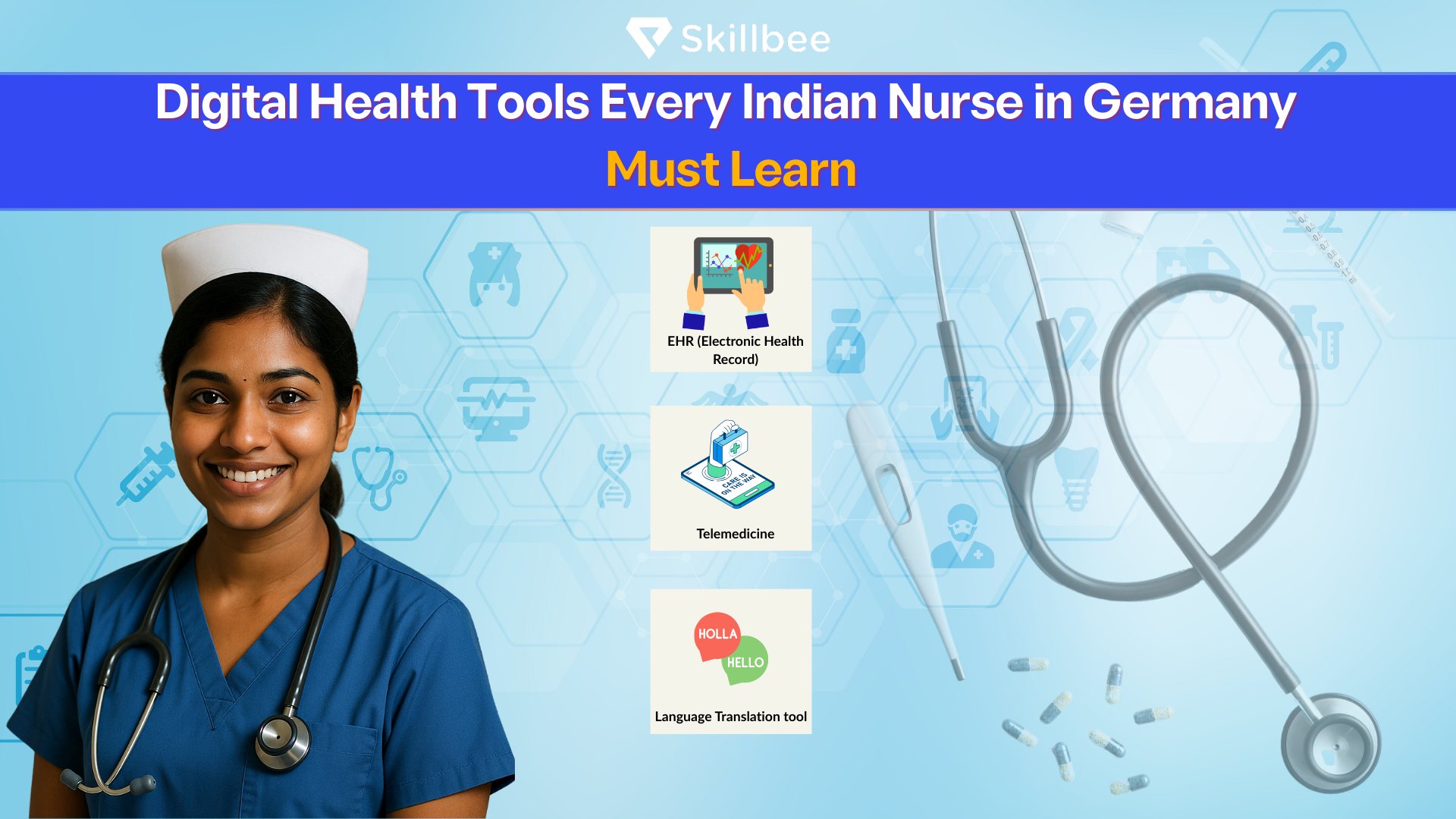
Germany’s healthcare sector is rapidly transforming with developing technology. German government plays an important role in it by introducing initiatives like Digital Healthcare Act and the widespread adoption of electronic health records, the technology is becoming an integral part of patient care. Hospitals and clinics are increasingly relying on interconnected platforms to manage medical histories, prescriptions, diagnostics and even remote consultations. Telemedicine, AI-powered clinical tools, and patient monitoring apps are important in ensuring faster, safer and coordinated healthcare delivery. This shift will improve patient outcomes and will also address staffing shortage by making healthcare process more efficient and data driven.
Nurses are the backbone of healthcare system and in Germany, nurses play an important role in ensuring smooth implementation of digital solutions. For Indian nurses who are seeking an opportunity to relocate and work in Germany, they need to have proper understanding of these digital tools, in a way it is to integrate into the local healthcare environment more efficiently. Many hospitals are now expecting nurse to confidently operate on digital platform for digitally charting, communicating with physicians online, managing medication and also coordinating with other departments. Staying updated will help Indian nurses in Germany to overcome language barriers, reduce errors and also build trust with colleagues and patients. Familiarity with digital health systems also signals professionalism, adaptability, and readiness to take on greater responsibilities.
Digital literacy directly impacts the quality of nursing care. When nurse can quickly access accurate patient data, communicate effectively across all the departments and use decision supporting tools, they provide safer and more personalized treatment. Efficiency helps in improving routine tasks like documentation, appointment scheduling, or medication checks are streamlined, giving the nurses free time for patient interaction. Moreover, nurses are skilled in using advanced healthcare technology often find better career opportunities from specialized nursing roles to leadership and training positions. In a competitive healthcare market like Germany’s, digital competency can distinguish an international nurse as a valuable, future-ready professional.
Understanding Germany’s Digital Healthcare Landscape

Germany’s Push Toward Digital Healthcare
In recent years, Germany has increased its pace in adapting full digital healthcare system. Laws like the Digital Healthcare Act (Digitale-Versorgung-Gesetz – DVG) and the Hospital Future Act (Krankenhauszukunftsgesetz – KHZG) are designed to modernise, how nurses can provide the care to patients. EHRs also known as Electronic Health Records are becoming standard giving doctors, nurses and patients unified medical histories. Telemedicine platforms provide specialist consultation and are more accessible which can be pretty useful in those areas where immediate consultation by doctors or nurses lacks, Telemedicine helps by proving e-consultation and e-prescription which is also called (E-Rezepte). E-prescription or E-Rezepte are also replacing paper-based processes.
Hospital and Clinic Digital Infrastructure
Most hospitals and clinics in Germany adapts to these new changes in the digital network. These system helps the healthcare professionals to interconnect patient registration, laboratory results, imaging, nursing notes and also medication management. Many facilities are using these specialized software for scheduling, treatment planning and also in interdisciplinary communications which ensures that the entire nursing team is aligned. At the same time data privacy regulations, which includes General Data Protection Regulation governs the nurses and other healthcare professionals on how patients information can be collected, stored and shared. Nurses must be aware of these requirements which ensures that they can access and handle these sensitive data and can maintain its confidentiality and security.
Challenges for Indian Nurses Adapting to a Tech-Driven System
For Indian nurses transitioning to Germany, the healthcare facility shift towards high digitalized healthcare can feel overwhelming. While many Indian hospitals are adopting technology, the system in Germany may be advanced, standardized as well as tightly regulated. The challenges that Indian nurses may face:
- Language Barrier: Language barrier is the most important challenges which nurses may while communicating. They may encounter this challenge when they are navigating software or medical terminology in German.
- Learning new digital platforms: Sometimes it can be difficult to learn digital platforms, as nurse may find it unfamiliar or complex.
- Understanding GDPR complainces: GDPR compliance is important especially around who can or cannot access which patient records and how their data should be handled.
- Adapting to a documentation-heavy culture: Documentation heavy culture is where every step of care is digitally recorded for legal and quality assurance purposes.
With proper training, mentorship, and practice, these challenges can be quickly overcome, turning digital tools into powerful assets that enhance both care quality and career growth.
Essential Digital Health Tools for Nurses in Germany

1.Electronic Health Records (EHR) Systems
Electronic health records system are considered as the backbone of modern and developing German Healthcare. This system allows nurses and doctors to store. Update and retrieve patients information in secure environment. Popular platforms include CGM (CompuGroup Medical), Cerner and SAP-based hospital systems.
- What you’ll do: The nurses required to enter vital signs, nursing notes, medication charges and also care plan for patients.
- Best practices: The nurses are required to verify the patient’s identity before any documentation process, follow hospital policies for access rights and also log out after maintaining the confidentiality.
2. Telemedicine & Remote Monitoring Platforms
Telemedicine connects patients and healthcare professionals through call or video call consultations, while remote monitoring apps track patients’ vital information (like blood pressure, glucose, or oxygen levels) outside the hospital.
- How it helps: Reduce hospital visits, improves access to specialists and supports chronic disease management.
- Nurses Role: they are required to prepare patients for virtual consultation, monitor alerts and also ensures data flows correctly in the patients’ record. Common tools may be integrated directly into hospital portals and use certified third-party apps approved by the German health authorities.
3.Patient Communication Apps & Translation Tools
For international nurses like Indian nurse, communication is one of the biggest challenges due to language barrier. There are many digital tools which can help in overcoming the language barrier and also improve patient interactions.
Tools which can help in improve patient interactions:
DeepL: DeepL provides accurate German-English medical translations.
MediBabble: MediBabble can help nurses in translating medical phrase.
Hospital-approved translator tools: Some hospitals in Germany used their own secure apps or devices for the multilingual conversations.
Why it matters: It matters as these apps or tools will ensure that patients understand their care plans, build trust and reduce miscommunication risks.
4.E-Learning & Training Platforms
Continuous education is important in Germany and many hospitals relied on digital platform for the training.
- Pflegecampus and other eLearning portals helps nurses from Indian or other country to understand the topics like hygiene standards, legal updates and clinical best practices.
- Some e-learning platforms provide language support too by allowing Indian nurses to improve their German vocabulary while staying compliant with training requirements.
Data Security & Compliance: What Nurses Must Know

In Germany, patient data protection is taken seriously. The General data protection regulation (GDPR) alongside National Healthcare Privacy Laws has set strict rules on how medical information should be collected, stored, shared and accessed. For nurses this means their every interactions with digital systems like checking lab results, updating patients’ record and sending message to doctor, the nurses must comply with these standards.
Best practices for handling patient’s data securely
To stay compliant and to protect patient trust, nurses should:
- Access what is necessary for their role and specific patient assignment.
- They should log in with personal credentials and never should share their username and passwords.
- They should log out or lock systems when leaving their workstation.
- They should use hospital approved devices and networks for any patient related communication.
- Nurses should report any kind of data breach immediately to the IT department.
Tips for Indian Nurses to Quickly Adapt

Adjusting to Germany’s high digital healthcare environment may sometimes feel challenging, but with right approach they can gain confidence quickly. Given below are some tips which can help Indian nurses working in Germany:
- Attend in-house hospital training on digital systems: Most hospital offers structured onboarding sessions. Pay close attention, ask question and take notes, these sessions often cover shortcuts, legal requirements and also troubleshooting steps.
- Practice with demo versions or tutorials before starting: Many software providers offers training modules where they can learn without any risk of altering real patient data. Using of these tools will help nurses to sped up their comfort level.
- Network with peers for real-time tips and problem-solving: Senior nurses or colleagues from similar backgrounds can share practical insights that aren’t in the manuals. Peer support often helps you learn faster and reduces the stress of adjusting to new systems.
- Continue improving German medical vocabulary: Digital tools, even intuitive ones, often use clinical terminology in German. Building your medical vocabulary will make navigating interfaces smoother and reduce errors caused by misinterpretation.
Conclusion
The digital transformation of Germany’s healthcare system is reshaping the way nurses deliver care, making technology an essential part of everyday practice. From electronic health records and telemedicine to patient communication apps and e-learning platforms, digital tools are no longer optional — they are core skills every nurse must master. For Indian nurses, developing digital literacy not only ensures smoother integration into the German healthcare environment but also enhances patient safety, builds trust, and opens doors to greater career opportunities.
Adapting may seem challenging at first, but with training, mentorship, and a commitment to continuous learning, Indian nurses can confidently thrive in Germany’s tech-driven hospitals and clinics.
At Skillbee, we understand these challenges and are dedicated to supporting Indian nurses in their journey to Germany. Our recruitment programs not only connect skilled nurses with promising opportunities abroad but also prepare them with the knowledge, resources, and guidance needed to succeed in an advanced healthcare system. By bridging talent with demand, we ensure that nurses are future-ready and Germany’s patients receive the highest standard of care.
 +971 52 119 7025 (UAE)
Leave a Reply