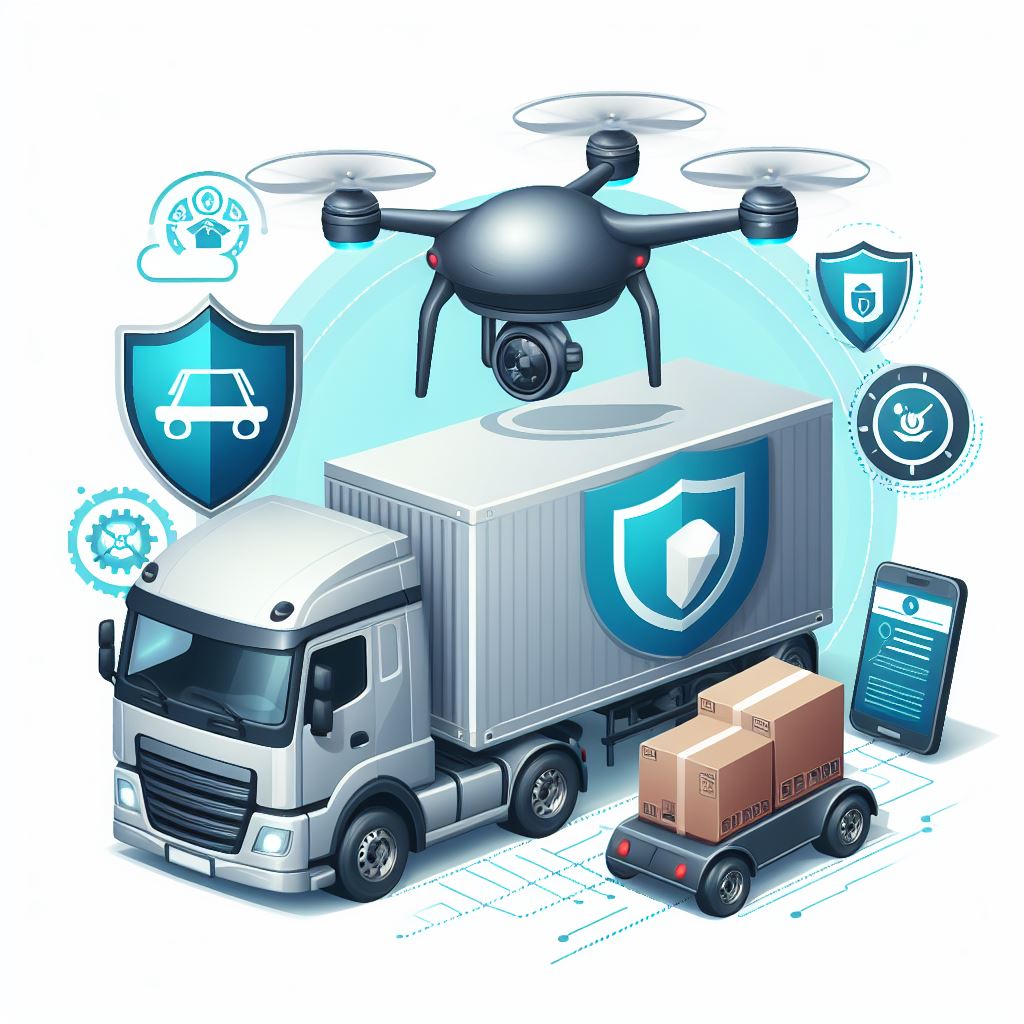
In recent years, the advent of drone delivery services has sparked a notable trend in the realm of logistics and transportation. With technological advancements, companies are increasingly exploring the use of drones as a means of delivering goods and services to customers swiftly and efficiently. This rising trend of drone delivery services holds immense promise, revolutionizing the way goods are transported and delivered.
Though, the delivery of goods are not completely focused on drones, there are many modes by which deliveries of goods are done, But nowadays the most promising mode of delivery that has been intensified, primarily focus on two mode: truck delivery (the traditional mode) and drone delivery (an initiative mode to adapt growing technologies).
Truck delivery, a traditional mode of transportation, relies on fleets of trucks to transport goods from distribution centres to their final destinations. This mode of transportation has always presents several advantages, including its reliability and adaptability in facing various weather conditions, the diverse terrains efficiently and its ability to carry large and heavy loads. However, it also faces limitations such as traffic congestion and environmental concerns related to emissions.
On the other hand, Drone delivery presents more innovative approaches such as, utilizing unmanned aerial vehicles to swiftly delivering of packages directly to customers’ doorsteps. This mode of delivery of goods offers advantages such as fast delivery times and the ability to reach remote or inaccessible areas. Nonetheless, drone delivery is hindered by limitations such as payload capacity restrictions, regulatory hurdles, and concerns regarding airspace safety and security.
This blog will explore more factors about how truck deliveries are winning over drone deliveries.
Reliability and Capacity
Reliability of trucks compared to drones, especially in adverse weather conditions or technical failures:
Trucks have long been the used as the main mode of the transportation in industry due to their robustness and adaptability. Unlike drones, which are susceptible to weather fluctuations and technical glitches, trucks offer a dependable mode of delivery, especially in adverse conditions. Whether it’s navigating through snowstorms, heavy rain, or extreme temperatures, trucks can reliably transport goods without significant interruptions. Additionally, trucks are operated by skilled drivers who can respond to unforeseen challenges on the road, further enhancing their reliability.
While, Drones are sensitive to weather conditions such as strong winds, rain, and temperature extremes. These factors can significantly impact their ability to operate safely and efficiently. Moreover, drones rely heavily on intricate technological systems, increasing the likelihood of technical failures that could disrupt delivery schedules. In adverse weather or technical malfunctions, drones may be grounded, leading to delays and logistical complications.

Capacity of trucks to carry larger and heavier loads, making them more suitable for bulk deliveries:
One of the standout advantages of trucks is their incomparable capacity to transport large and heavy loads. Their spacious cargo holds and sturdy the infrastructural of truck, the trucks are particularly designed for bulk deliveries across vast distances. Whether it’s shipping industrial equipment, furniture, or perishable goods, trucks can accommodate diverse cargo requirements with ease. This capacity not only streamlines the logistics process but also reduces the need for multiple trips, thereby optimizing efficiency and minimizing costs.
On the other hand, drones are limited by their payload capacity, which restricts the size and weight of the packages they can carry for delivery. While drones excel in delivering lightweight items over short distances, they lack the capacity to handle bulk shipments effectively. Attempting to scale up drone delivery to accommodate larger loads would require significant advancements in technology and infrastructure, posing practical challenges and cost implications.

Cost-Effectiveness
The cost structures involved in truck delivery versus drone delivery:
Truck delivery and drone delivery involves distinct cost structures, each having its own set of expanses. It is important to understand the cost dynamics for evaluating overall cost effectiveness of both the mode of delivery: the truck delivery mode and drone delivery mode.
Firstly, the initial investment, maintenance and operational costs
Truck delivery typically involves significant initial investments in purchasing or renting vehicles, establishment of various distribution centres, hiring truck drivers. However, once the infrastructure is in place, the ongoing maintenance and operational costs are predictable. The maintenance costs includes: vehicle maintenance, fuel, insurance of vehicle and salaries of drivers.
While, Drone delivery receives substantial upfront investment in drone technology, which includes the purchase of drone, development of navigation systems, and establishments of delivery hubs. Additionally, ongoing maintenance costs in drone includes, software update, battery replacements, and repair services that contribute overall expanses.

Role of economy in cost effectiveness of both modes of deliveries.
Trucks are considered as backbone of economy. The more goods they carry, the cheaper it gets to transport. This is because the big costs, like paying for purchasing or renting the truck and building of roads, can be spread out for lot of deliveries. So, when companies move more goods, they can acquire better prices with their suppliers, which saves them more money. The more they transport, the more they save.
Drone delivery faces challenges in achieving economies of scale due to limitation of payload capacity they can carry and the range they can cover to make deliveries. Drones are best suited for small, time-sensitive deliveries over shorter distances, making it difficult to spread fixed costs across large number of shipments. Additionally the high initial investment required for drone technology may acts as barriers to scalability and hence limiting the potential for cost effectiveness.
While drone delivery offers innovation and speed, truck delivery remains the more cost-effective option for transporting goods, especially for bulk shipments and long-distance logistics operations. The scalability and established infrastructure of truck delivery enable it to leverage economies of scale, resulting in lower overall costs compared to drone delivery in many scenarios.
Environmental Impact
Environmental footprint of truck delivery vs drone delivery:
Truck delivery typically emits from pollution than drone delivery. Truck burn fuel and releases greenhouse gases that are harmful for environment.
However drones have the limited capacity and range, but it needs charging frequently. Both have environmental impacts, but drones offer potential for lower emission in short-distance deliveries.
Energy consumption, emissions and sustainability factors.
Truck deliveries relies on traditional combustion engines, which consume fossil fuel and emit greenhouse gases such as CO2 (carbon dioxide), NOx (nitrogen oxide) and particular matter (PM). These emission contributes to air pollution and climatic change, posing significant environmental concerns. Moreover, the infrastructure required for truck delivery, including roads and distribution centres that can further impact natural habitats and ecosystem.
In comparison, drone delivery offers the potential for reduced energy consumption and emissions, especially for last-mile-deliveries. Electric drones produces fewer emissions than diesel powered truck and can navigate directly to delivery destination, bypassing congested roads and reducing fuel consumption.
Advancement in electric and autonomous trucking technology
The future of truck delivery holds promise for environment sustainability through the advancement of technology like electric trucks and autonomous trucks. Electric trucks, powered by renewable energy sources such as solar or wind power, offer a cleaner alternative to traditional diesel vehicles, reducing emissions and dependence on fossil fuels. Furthermore, autonomous truck technologies have the potential to optimize route planning and vehicle efficiency, further enhancing environmental performance by reducing fuel consumption and emissions.
Thus, giving tough competition to drone delivery system in terms of environmental friendly situation.
The overall lower environmental impact of truck delivery, despite concerns about emissions
Despite concerns about emission of greenhouse gases, truck delivery maintains a lower overall environmental impact. While trucks produce emissions during operation, their larger payload capacity and efficiency in transporting bulk goods result in fewer trips overall, minimizing the environmental impact per unit of goods transported. Additionally, the existing infrastructure for truck delivery, including roads and distribution networks, that is already in place and can be optimized for sustainability through electrification and automation initiatives.
On other hand, drone delivery, while offering potential benefits in terms of energy efficiency and emissions reduction, faces challenges related to scalability, range limitations, and regulatory hurdles. The manufacturing, operation, and maintenance of drone fleets also have environmental implications, including resource consumption and waste generation. Therefore, while drone delivery may offer advantages in specific scenarios, such as last-mile logistics in urban areas, truck delivery remains the more environmentally sustainable option for most transportation needs.
Safety and Security
Safety concerns associated with drone delivery, including airspace regulations and collision risks:
Using drone deliveries raises safety worries. Drone needs to be cautious and follow safety rules in the sky to avoid collision with airplanes or any other drones. If the rules are not followed, accidents can happen, causing damage and disrupting flights.
Theft and tampering of risk between truck delivery and drone delivery
Both truck delivery and drone delivery are susceptible to theft and tampering risks in different ways. During time of delivery, truck drivers faces the threat of theft, especially in poorly maintained rest stops or any crime prone areas. The cargo theft incidents also involves in truck delivery resulting in financial losses and disruption of supply chain.
On the other hand, Drone deliveries are vulnerable to interception or tampering by unauthorized individuals seeking to steal or manipulate packages. Drones flying to low altitudes are more accessible to potential threats, increasing the risk of thefts or tampering at the time of delivery.

Security measure and protocol implemented in truck delivery system
In truck delivery, security measures includes, GPS tracking to monitor the location of cargo, tamper evident seals on packages to detect thefts and background checks for drivers. Protocols for security measure in loading and unloading involves that task can be fulfilled by authorized personnel only. For safeguarding trucks during transit, some companies use surveillance and alarm systems too.
For drone delivery systems, security measures encompass encryption of communication signals to prevent hacking and interception. Geo-fencing restricts drones from entering prohibited airspace, while payload encryption ensures data protection. Protocols involve pre-flight safety checks and automated emergency landing procedures in case of malfunctions. To deter theft, drones may be equipped with anti-tampering mechanisms and require authentication for package release.

Conclusion
In conclusion, while drone delivery services offer innovation and speed in the realm of logistics, truck delivery continues to hold a competitive edge in several key areas. Firstly, the reliability and capacity of trucks surpass that of drones, particularly in adverse weather conditions and when transporting large and heavy loads over long distances. Additionally, truck delivery boasts a more established infrastructure and greater scalability, allowing for more cost-effective operations, especially for bulk shipments.
Moreover, truck delivery demonstrates a lower environmental impact compared to drone delivery, despite concerns about emissions. With advancements in electric and autonomous trucking technology, the future of truck delivery holds promise for further reducing its environmental footprint.
In terms of safety and security, while both modes of delivery face risks, truck delivery benefits from established protocols and security measures that mitigate theft and tampering risks more effectively than drone delivery.
While drone delivery may have niche applications, such as last-mile logistics in urban areas, truck delivery remains the more reliable, cost-effective, and environmentally sustainable option for most transportation needs. As technology continues to evolve, both modes of delivery will likely coexist, each serving its unique purpose in the broader landscape of logistics and transportation.
 +971 52 119 7025 (UAE)
Leave a Reply