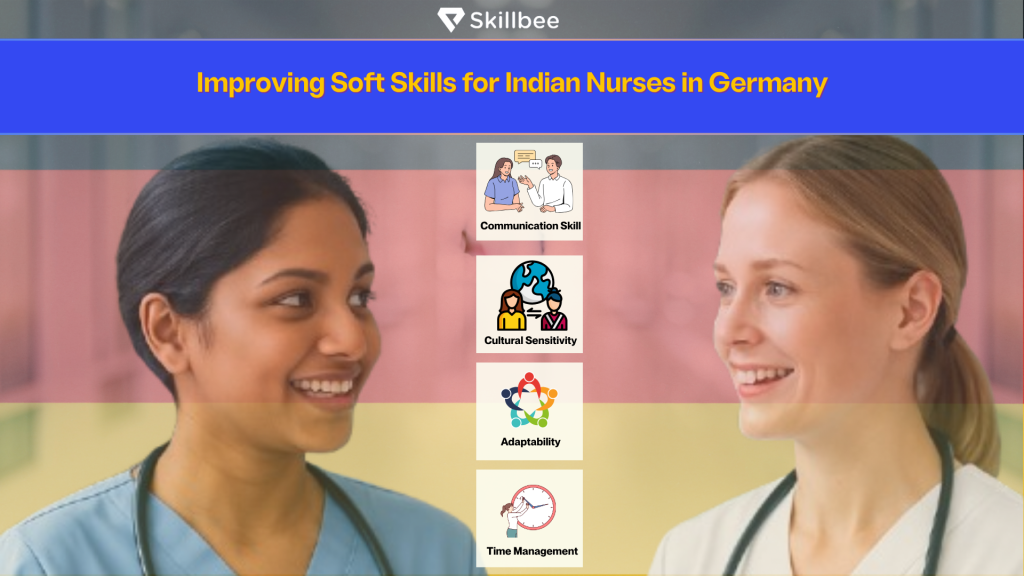
Germany continues to face a growing shortage of qualified nurses, creating significant opportunities for internationally trained healthcare professionals, including Indian nurses. While clinical knowledge and technical expertise are essential, improving soft skills for Indian nurses in Germany has become equally important for long-term career success. Communication, empathy, teamwork, adaptability, and professionalism play a crucial role in delivering high-quality patient care and building effective relationships with colleagues, patients, and their families. German healthcare employers highly value nurses who can communicate clearly, work collaboratively, and adapt to diverse workplace environments. For Indian nurses, developing these soft skills can ease integration, improve job satisfaction, and create opportunities for career advancement.
This blog on improving soft skills for nurses in Germany explores the key soft skills required for nursing success, common workplace challenges, and practical strategies for professional growth and long-term career development.
Understanding Soft Skills for Indian Nurses in Germany in a German Healthcare Context

What Are Soft Skills?
Soft skills for nurses in Germany refer to the personal qualities and social abilities that influence how effectively a nurse interacts with patients, colleagues, and healthcare professionals. For nurses, these skills include clear communication, empathy, teamwork, adaptability, stress management, and professionalism. These human-centred qualities are just as important as clinical expertise in delivering safe, compassionate, and high-quality patient care.
Why German Hospitals Value Soft Skills
- Patient-Centred Care: Soft skills for nurses in Germany are essential because German healthcare strongly emphasizes patient rights and emotional well-being. Nurses are expected not only to follow medical protocols but also to engage with patients respectfully, explain procedures clearly, and provide emotional support. Compassion and effective communication are considered vital to the healing process.
- Interdisciplinary Teamwork: In Germany, nurses work closely with doctors, physiotherapists, social workers, and other healthcare professionals. Collaborative care is the standard, making soft skills for Indian nurses in Germany especially important. Nurses who communicate clearly, listen actively, and cooperate effectively with multidisciplinary teams are highly valued.
- Effective Communication Across Cultures: As Germany’s healthcare workforce becomes increasingly diverse, soft skills for Indian nurses in Germany help bridge language and cultural differences. Nurses must navigate cultural sensitivities, prevent misunderstandings, and ensure every patient feels comfortable, respected, and understood. Strong interpersonal and cross-cultural communication skills are key to building trust and delivering quality care.
Key Soft Skills Indian Nurses Should Focus On

To grow in the German healthcare environment, Indian nurses must strengthen themselves in skills that complement their clinical skills. These skills will help enhance the quality of patient care, but also ease workspace integration and open up professional growth opportunities.
Communication Skills
Soft skills for nurses in Germany begin with effective communication, which is essential for safe and high-quality nursing practice. Nurses must be able to speak clearly and respectfully with patients, families, and other hospital staff.
Effective communication includes both verbal and nonverbal communication, such as body language, eye contact, and tone of voice.
Active listening, responding with empathy, and maintaining professionalism in conversations are all expected.
Achieving B2-level German language proficiency is important because it helps nurses understand medical terminology more easily and engage in meaningful dialogue with patients and colleagues.
Empathy and Cultural Sensitivity
Among the most important soft skills for nurses in Germany are empathy and cultural sensitivity. German patients expect nurses to be understanding, respectful, and compassionate while providing care.
Indian nurses should learn to recognise and respect cultural differences, especially in areas such as personal space, consent, and decision-making. Empathy helps patients feel safe, heard, and supported. It is equally important to respect patient privacy, autonomy, and rights, which are legally protected in Germany.
Adaptability and Flexibility
Soft skills for nurses in Germany also include adaptability and flexibility. Working in a foreign healthcare system requires a willingness to adjust, learn, and grow.
Nurses must be open to learning new procedures, following unfamiliar hospital protocols, and working different shifts. Coping with homesickness, language fatigue, and lifestyle changes is part of the transition. Those who embrace continuous learning and adaptability find it easier to integrate and progress in their careers.
Teamwork and Collaboration
Teamwork is one of the most valued soft skills for nurses in Germany.
Nurses collaborate with doctors, physiotherapists, and other healthcare professionals, making effective communication and coordination essential.
Contributing to a positive and respectful work environment, sharing responsibilities, offering support, and accepting constructive feedback are all qualities of a strong team player.
Professionalism and Time Management
Professionalism and time management are essential soft skills for nurses in Germany.
Nurses are expected to be punctual, dependable, and ethically responsible at all times.
Good time management helps them handle multiple patients, complete documentation, and manage administrative tasks efficiently.
Taking initiative when appropriate while respecting workplace hierarchy and professional boundaries contributes to long-term success in Germany’s healthcare system.
Practical Steps to Improve Soft Skills

Soft skills can be learned, practiced, and improved over time. For Indian nurses adapting to the German healthcare system, developing these skills is a continuous process that requires both effort and the right environment. There are some practical, effective ways to strengthen soft skills:
Join Communication Workshops or Language Cafés
One of the best ways to strengthen soft skills for nurses in Germany is by participating in communication workshops and language cafés. Many hospitals, nursing schools, and community organisations offer training sessions that focus on healthcare-specific communication, patient interactions, conflict resolution, and professional etiquette.
Language cafés are informal meetups where nurses can practice German with native speakers or other learners in a relaxed and supportive environment. These sessions improve conversational fluency, pronunciation, listening skills, and confidence in everyday situations.
Regular participation also helps nurses become more comfortable explaining medical procedures, asking questions, responding to patient concerns, and communicating effectively with colleagues. In addition to language improvement, these interactions provide valuable exposure to German culture, workplace communication styles, and social customs, making it easier to integrate into both professional and everyday life.
By consistently attending workshops and language cafés, Indian nurses can develop stronger communication skills, build meaningful professional relationships, and enhance their overall confidence in Germany’s healthcare system.
Observe and Learn from German Colleagues
One of the most effective ways to develop soft skills for nurses in Germany is by learning from experienced colleagues. Senior nurses and healthcare professionals can provide valuable insights into workplace expectations, patient care, and communication practices that may differ from those in India.
Observe how experienced nurses:
- Communicate with patients and their families calmly and respectfully.
- Handle stressful or emergency situations while remaining professional.
- Use appropriate tone, body language, and timing during conversations.
- Collaborate with doctors and other healthcare professionals.
- Resolve misunderstandings and maintain positive relationships with patients and colleagues.
Indian nurses should not hesitate to ask questions, seek guidance, or request constructive feedback from their supervisors and coworkers. Being open to learning demonstrates professionalism and a willingness to improve.
Regular feedback helps nurses identify areas for development, refine their communication style, and adapt more quickly to German workplace culture. Over time, learning from experienced colleagues builds confidence, strengthens interpersonal skills, and supports long-term career success in Germany’s healthcare system.k.
Take Part in Intercultural Training Sessions
Another effective way to develop soft skills for nurses in Germany is by participating in intercultural orientation and training programs. Many hospitals, nursing schools, and healthcare organisations offer these programs specifically for internationally trained nurses to help them adapt to Germany’s healthcare environment and workplace culture.
These programs typically provide guidance on:
- German workplace expectations, including professionalism, punctuality, documentation standards, and teamwork.
- Patient behaviour and cultural values, helping nurses understand different beliefs, communication styles, and expectations regarding healthcare.
- Cross-cultural communication, enabling nurses to communicate effectively with patients, families, and colleagues from diverse backgrounds while avoiding misunderstandings.
- German healthcare ethics and patient rights, including informed consent, patient autonomy, privacy, and confidentiality.
- Conflict resolution and workplace etiquette, teaching nurses how to handle challenging situations professionally and respectfully.
Participating in these orientation programs helps Indian nurses gain confidence, improve cultural awareness, and build stronger relationships with patients and colleagues. As a result, they integrate more smoothly into the German healthcare system and are better prepared for long-term professional success.
Conclusion
Building a successful nursing career in Germany as an Indian nurse requires more than just clinical competence. In a country that values patient-centered care, transparent communication, and multicultural collaboration, soft skills become the bridge that connects your medical knowledge with real-world care and integration. Strengthening soft skills like empathy, communication, adaptability, and professionalism not only enhances your daily interactions but also opens doors to long-term growth, leadership roles, and greater job satisfaction.
At Skillbee, we understand that migrating to Germany for a nursing role is a life-changing step. That’s why we go beyond just recruitment. Skillbee is committed to supporting Indian nurses throughout their journey by providing comprehensive German language training (up to B2 level), visa assistance, and personalized counselling on adapting to the German healthcare system. Our goal is to ensure that you are not just placed in a job, but fully prepared, mentally, emotionally, and professionally to succeed in it.
With the right soft skills and the right support system, you can confidently start your nursing career in Germany and make a real difference in people’s lives—while building a fulfilling future of your own.
 +91 73 6009 6009 (India)
 contact@skillbee.com
Leave a Reply