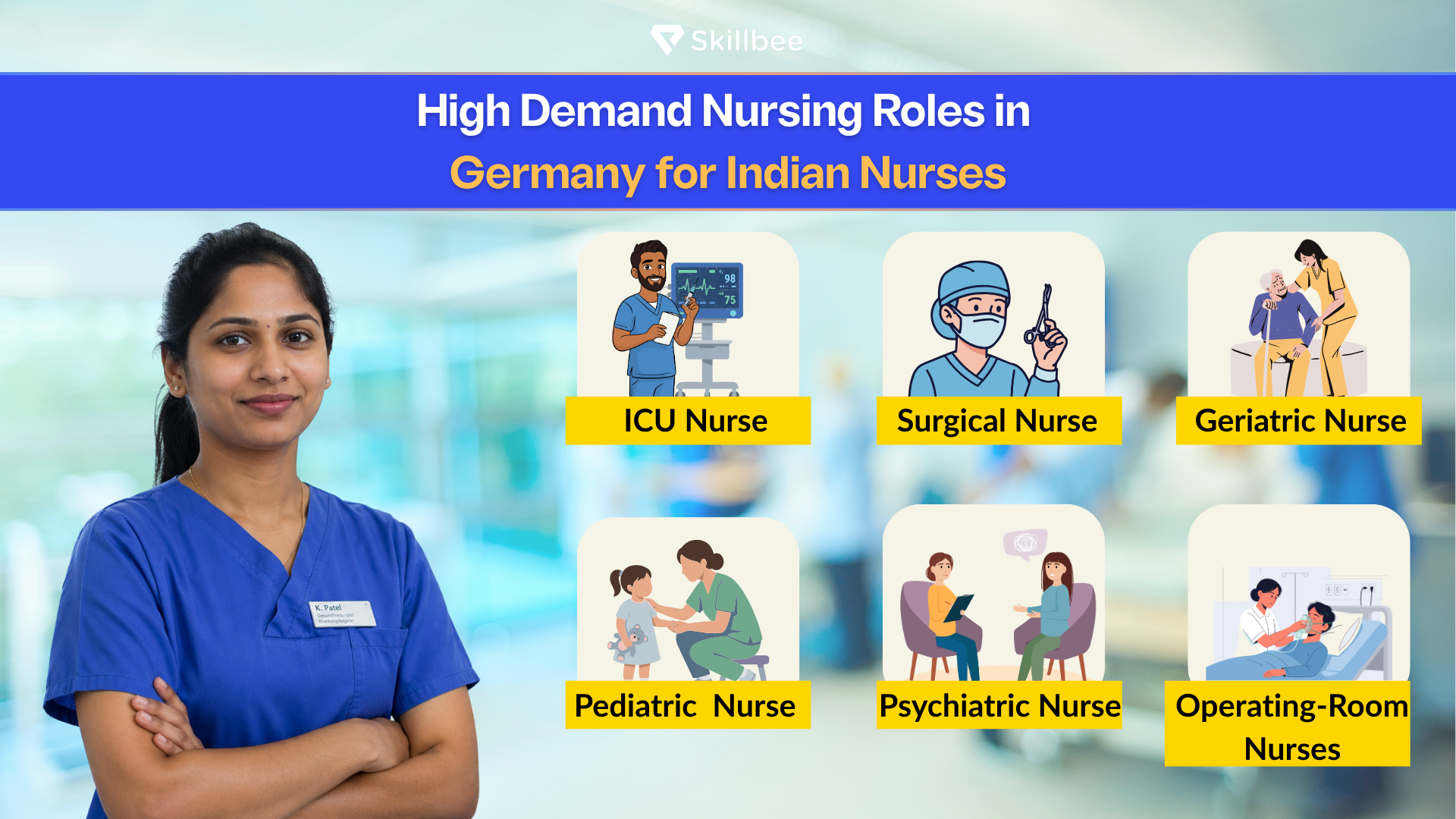
Germany is facing a growing shortage of nursing professionals, creating excellent career opportunities for qualified healthcare workers from abroad. Factors such as an ageing population, increasing healthcare demands, and the retirement of experienced nurses have significantly increased the need for skilled nursing staff across hospitals, rehabilitation centres, and elderly care facilities. As a result, high-demand nursing roles are becoming increasingly important for international healthcare professionals seeking career opportunities in Germany.
Among the most sought-after candidates are Indian nurses, who are widely recognized for their strong clinical knowledge, practical experience, and commitment to high-quality patient care. Their adaptability, willingness to learn German, and ability to work in multicultural healthcare environments make them valuable additions to the German healthcare system. With demand continuing to rise, high-demand nursing roles are opening new opportunities for Indian nurses in Germany across hospitals, elderly care facilities, rehabilitation centres, and specialised healthcare settings.
This article explores the key reasons behind Germany’s nursing shortage, the High-Demand Nursing Roles available for international professionals, and why Indian nurses are becoming an increasingly valuable part of Germany’s healthcare workforce.
Why Germany Needs Indian Nurses

The demand for nurses in Germany continues to grow due to a combination of demographic, infrastructural, and policy-driven factors, creating excellent opportunities for Indian nurses in Germany. One of the primary reasons is the country’s rapidly ageing population. Germany has one of the oldest populations in Europe, with a significant percentage of citizens aged 65 and above. This demographic shift has led to a sharp increase in chronic illnesses, age-related conditions, and the need for ongoing medical supervision. Consequently, there is a growing demand for long-term care services, including nursing homes, assisted living facilities, and home-based care.
At the same time, Germany is expanding its healthcare infrastructure to meet the rising demand for medical services. New hospitals, specialised clinics, and rehabilitation centres are being developed, while existing facilities are upgrading their capabilities with advanced medical technologies. While these improvements enhance healthcare accessibility and quality, they also require a larger workforce of trained nurses to ensure smooth operations. This growing demand is creating more career opportunities for Indian nurses in Germany, who are known for their clinical expertise and dedication to patient care.
Recognising the urgency of the situation, the German government has introduced several initiatives to attract international nursing professionals. These include simplified visa procedures, faster recognition of foreign qualifications, and structured language training programs. Such policies are designed to make it easier for skilled nurses from countries like India to transition into the German healthcare system. As a result, Indian nurses in Germany are playing an increasingly important role in addressing workforce shortages while building rewarding international careers.
Benefits of Working as Indian Nurses in Germany

For Indian nurses in Germany, high-demand nursing roles offer a unique combination of financial stability, professional growth, and long-term career opportunities. One of the most attractive benefits is the competitive salary structure. Indian nurses in Germany receive structured pay scales, regular salary increments, and additional benefits such as health insurance, paid leave, and overtime compensation. Given the ongoing shortage of healthcare professionals, job security is also high, allowing nurses to build a stable and predictable future.
Another important benefit of high-demand nursing roles is the opportunity to work in Germany’s well-developed healthcare system. Hospitals and medical facilities use modern infrastructure, advanced medical equipment, and established clinical practices. For Indian nurses, working in these high-demand nursing roles can be a valuable learning experience, helping them strengthen their clinical skills, adapt to international standards, and gain practical exposure while working alongside experienced healthcare professionals.
For many Indian nurses, high-demand nursing roles can also support long-term career planning in Germany. With the right qualifications, professional experience, and legal requirements, nurses may become eligible for long-term residence options after meeting the required conditions. Building experience in high-demand nursing roles can strengthen their professional profile while creating opportunities for career progression and specialisation. Over time, this international experience can also help Indian nurses explore wider career opportunities across Europe and other global healthcare markets.
High Demand Nursing Roles in Germany
Germany’s healthcare system offers a wide range of nursing careers, but some specialisations are in greater demand because of workforce shortages and changing patient needs. Exploring these high-demand nursing roles can help Indian nurses identify suitable career options, understand where their skills are most needed, and improve their chances of finding the right opportunity in Germany.
Geriatric nursing is one of the high-demand nursing roles in Germany. Geriatric nurses specialise in caring for elderly patients, particularly in nursing homes, assisted living facilities, and home care settings. Their responsibilities include managing chronic illnesses, assisting with daily activities, administering medication, and providing emotional support. With the country’s ageing population continuing to grow, the demand for skilled geriatric nurses remains consistently high.

Another type of nurses is intensive care nursing. ICU nurses work with critically ill patients who require constant monitoring and advanced medical support. They handle complex medical equipment, administer life-saving treatments, and collaborate closely with doctors and other healthcare professionals. This role demands strong clinical expertise, specialised training, and the ability to perform effectively under pressure.

Emergency room nursing is also a high-demand nursing roles, particularly in busy hospitals and trauma centres. ER nurses operate in fast-paced environments where quick decision-making is essential. They are responsible for assessing patients, prioritising cases based on severity, and providing immediate care in emergency situations. This role requires adaptability, resilience, and strong problem-solving skills.

Paediatric nursing is another important specialisation, focusing on the care of infants, children, and adolescents. Paediatric nurses work in hospitals, specialised clinics, and healthcare centres, providing both treatment and preventive care. This role requires a high level of patience, compassion, and the ability to communicate effectively with both young patients and their families.

Surgical or operating room nursing is equally vital within the healthcare system. Surgical nurses assist during medical procedures and are involved in pre-operative and post-operative care. They ensure that surgical procedures run smoothly by preparing equipment, supporting surgeons, and monitoring patients’ conditions. This role requires precision, technical knowledge, and attention to detail.

General staff nursing remains one of the most common entry points for international nurses in Germany. These nurses work across hospitals, clinics, and rehabilitation centres, handling a wide range of responsibilities such as patient care, medication administration, and coordination with medical teams. It provides a strong foundation for career growth and specialisation.
Requirements for Indian Nurses

To work in high-demand nursing roles in Germany, Indian nursing professionals must meet specific educational, language, and legal requirements. These requirements ensure that nurses have the knowledge, communication skills, and professional qualifications needed to provide safe, high-quality patient care and adapt smoothly to Germany’s healthcare system.
A recognised nursing qualification is the first essential requirement for high-demand nursing roles. Indian nurses must hold a valid degree or diploma from an accredited institution. German authorities assess these qualifications to determine whether they meet local standards. If there are differences in education or clinical training, candidates may need to complete an adaptation programme or additional coursework before they can fully qualify for their chosen nursing role.
German language proficiency is another important requirement for high-demand nursing roles. Nurses typically need to achieve at least B1 or B2 level under the Common European Framework of Reference for Languages (CEFR), depending on the stage of the recognition and employment process. Strong German language skills help nurses communicate clearly with patients, doctors, and colleagues, while also making it easier to handle clinical responsibilities and everyday life in Germany.
The licensing and recognition process, known as Anerkennung, is mandatory for foreign-trained nurses seeking high-demand nursing roles in Germany. Candidates need to submit educational documents, work experience certificates, and language credentials to the relevant authorities. Depending on the assessment, they may be asked to complete a knowledge examination or an adaptation programme before receiving full professional recognition.
Relevant work experience can also give candidates an advantage when applying for high-demand nursing roles. Nurses with practical experience in areas such as intensive care, emergency care, elderly care, and other specialised settings may be particularly attractive to employers. Strong clinical experience, combined with the required qualifications and German language skills, can help Indian nurses compete more confidently for opportunities in Germany.
Step-by-Step Process to Work in Germany

The journey for Indian nurses to work in Germany involves a structured and well-defined process. It begins with the application and document verification stage, where candidates submit their educational certificates, nursing registration, passport, and work experience records. These documents are evaluated to determine eligibility for the recognition process.
Once the application is underway, candidates typically begin German language training. Achieving the required B1 or B2 proficiency level is crucial for both professional practice and daily communication. Many candidates pursue language training alongside the document verification process to save time and improve their readiness.
After meeting the initial requirements, candidates are connected with German employers for interviews. These interviews assess clinical knowledge, communication skills, and cultural adaptability. A successful interview usually results in a job offer or employment contract, which is a key requirement for the next stage.
The final step is the visa and relocation process. Candidates apply for a work visa by submitting the necessary documents to the German embassy, including their employment contract and recognition status. Once the visa is approved, nurses can travel to Germany, complete any remaining licensing requirements if necessary, and begin their professional journey.
Conclusion
Germany’s growing demand for skilled nursing professionals presents a strong and sustainable opportunity for Indian nurses looking to build international careers. With an ageing population, expanding healthcare infrastructure, and continuous government support for international hiring, the country offers long-term career stability, competitive salaries, and exposure to global medical standards. For Indian nurses, this is not just a job opportunity but a pathway to professional growth, financial security, and a better quality of life.
However, successfully transitioning to Germany requires the right guidance, preparation, and support, especially when it comes to language training, qualification recognition, and navigating the recruitment process. This is where Skillbee plays a crucial role. Skillbee actively recruits Indian nurses for opportunities in Germany, connecting them with trusted employers and ensuring a smooth, transparent hiring journey.
In addition to recruitment, Skillbee also supports candidates with structured German language training, helping nurses achieve the required B1/B2 proficiency levels needed to work effectively in Germany’s healthcare system. From application and documentation to interview preparation and visa assistance, Skillbee provides end-to-end support, making the entire process faster and more accessible for aspiring candidates.
For Indian nurses who are ready to take the next step in their careers, Germany offers immense potential, and with the right partner like Skillbee, that journey becomes significantly more achievable and rewarding.
 +91 73 6009 6009 (India)
 contact@skillbee.com
Leave a Reply