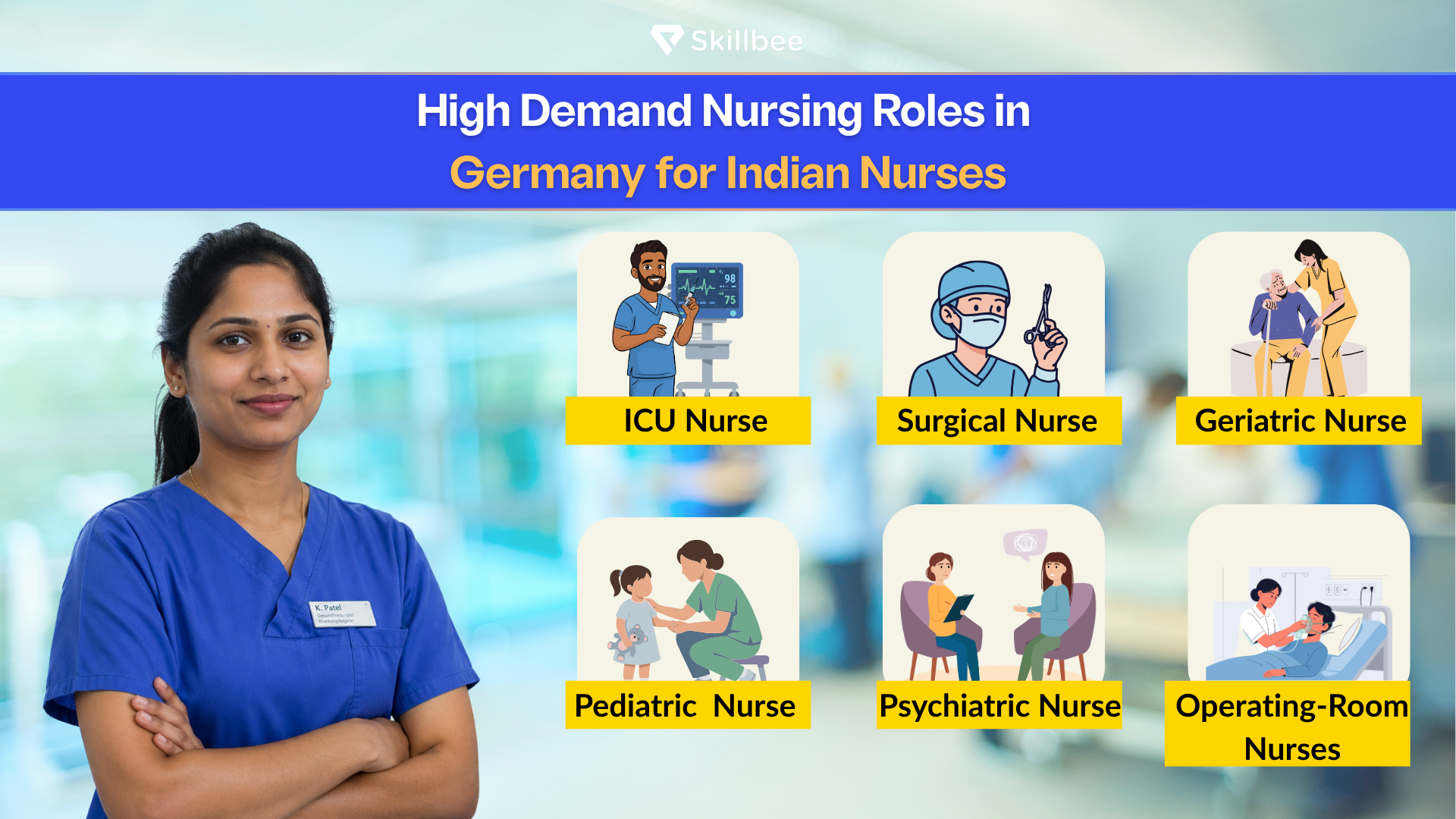
Germany is currently facing a significant shortage of healthcare professionals, particularly in the nursing sector. This growing demand is driven by demographic changes, an expanding healthcare infrastructure, and an increasing need for long-term patient care. As one of Europe’s most advanced healthcare systems, Germany continues to invest heavily in hospitals, rehabilitation centres, and elderly care facilities. However, the rapid growth of these services has created a widening gap between patient needs and the availability of skilled nursing professionals. As a result, healthcare institutions across the country are actively recruiting qualified nurses from abroad, with Indian nurses emerging as a highly preferred workforce.
A key factor behind this rising demand is Germany’s ageing population. A large proportion of the population is entering retirement age, which has significantly increased the need for continuous medical care, rehabilitation, and assistance with daily living activities. Elderly patients often require long-term care, placing additional pressure on the already stretched healthcare system. At the same time, many experienced local nurses are retiring, further intensifying the workforce shortage. This combination of increasing demand and declining supply has made international recruitment not just an option, but a necessity for Germany.
In this evolving landscape, Indian nurses are gaining strong recognition for their skills, adaptability, and dedication to patient care. Known for their solid clinical training and hands-on experience, Indian nurses are well-prepared to meet international healthcare standards. They are also highly regarded for their willingness to learn new languages, adapt to different cultures, and work in diverse medical environments. With the right training and language proficiency, Indian nurses can integrate effectively into the German healthcare system, making them an ideal choice for employers seeking to fill critical staffing gaps.
Why Germany Needs Nurses

The demand for nurses in Germany continues to grow due to a combination of demographic, infrastructural, and policy-driven factors. One of the primary reasons is the country’s rapidly ageing population. Germany has one of the oldest populations in Europe, with a significant percentage of citizens aged 65 and above. This demographic shift has led to a sharp increase in chronic illnesses, age-related conditions, and the need for ongoing medical supervision. Consequently, there is a growing demand for long-term care services, including nursing homes, assisted living facilities, and home-based care.
At the same time, Germany is expanding its healthcare infrastructure to meet the rising demand for medical services. New hospitals, specialised clinics, and rehabilitation centres are being developed, while existing facilities are upgrading their capabilities with advanced medical technologies. While these improvements enhance healthcare accessibility and quality, they also require a larger workforce of trained nurses to ensure smooth operations. Without sufficient staffing, even the most advanced healthcare systems struggle to deliver effective patient care.
Recognising the urgency of the situation, the German government has introduced several initiatives to attract international nursing professionals. These include simplified visa procedures, faster recognition of foreign qualifications, and structured language training programs. Such policies are designed to make it easier for skilled nurses from countries like India to transition into the German healthcare system and contribute effectively.
Benefits for Indian Nurses Working in Germany

For Indian nurses, working in Germany offers a unique combination of financial stability, professional growth, and long-term career opportunities. One of the most attractive benefits is the competitive salary structure. Nurses in Germany receive structured pay scales, regular salary increments, and additional benefits such as health insurance, paid leave, and overtime compensation. Given the ongoing shortage of healthcare professionals, job security is also high, allowing nurses to build a stable and predictable future.
Another major advantage is the opportunity to work in a highly advanced healthcare system. German hospitals and medical facilities are equipped with modern infrastructure, cutting-edge equipment, and well-defined clinical protocols. This environment allows nurses to enhance their clinical skills, gain exposure to advanced medical practices, and work alongside experienced healthcare professionals in an organised and efficient setting.
Germany also offers a clear pathway to permanent residency for international nurses. After working for a certain period and meeting eligibility criteria, nurses can apply for long-term residence permits. This provides the opportunity to settle in the country, access social benefits, and eventually bring family members. Additionally, the international experience gained in Germany significantly enhances a nurse’s professional profile, opening doors to career opportunities across Europe and other global healthcare markets.
High Demand Nursing Roles in Germany
Germany’s healthcare system offers a wide range of nursing roles, but certain specialisations are particularly in demand due to workforce shortages and patient needs. Understanding these roles can help Indian nurses choose the right career path and improve their employment prospects.
Geriatric nursing is one of the most in-demand fields in Germany. Geriatric nurses specialise in caring for elderly patients, particularly in nursing homes, assisted living facilities, and home care settings. Their responsibilities include managing chronic illnesses, assisting with daily activities, administering medication, and providing emotional support. With the country’s ageing population continuing to grow, the demand for skilled geriatric nurses remains consistently high.

Another critical area is intensive care nursing. ICU nurses work with critically ill patients who require constant monitoring and advanced medical support. They handle complex medical equipment, administer life-saving treatments, and collaborate closely with doctors and other healthcare professionals. This role demands strong clinical expertise, specialised training, and the ability to perform effectively under pressure.

Emergency room nursing is also a high-demand field, particularly in busy hospitals and trauma centres. ER nurses operate in fast-paced environments where quick decision-making is essential. They are responsible for assessing patients, prioritising cases based on severity, and providing immediate care in emergency situations. This role requires adaptability, resilience, and strong problem-solving skills.

Paediatric nursing is another important specialisation, focusing on the care of infants, children, and adolescents. Paediatric nurses work in hospitals, specialised clinics, and healthcare centres, providing both treatment and preventive care. This role requires a high level of patience, compassion, and the ability to communicate effectively with both young patients and their families.

Surgical or operating room nursing is equally vital within the healthcare system. Surgical nurses assist during medical procedures and are involved in pre-operative and post-operative care. They ensure that surgical procedures run smoothly by preparing equipment, supporting surgeons, and monitoring patients’ conditions. This role requires precision, technical knowledge, and attention to detail.

General staff nursing remains one of the most common entry points for international nurses in Germany. These nurses work across hospitals, clinics, and rehabilitation centres, handling a wide range of responsibilities such as patient care, medication administration, and coordination with medical teams. It provides a strong foundation for career growth and specialisation.
Requirements for Indian Nurses

To work as a nurse in Germany, Indian candidates must meet specific educational, language, and legal requirements. These criteria ensure that nurses can deliver high-quality patient care and integrate smoothly into the healthcare system.
A recognised nursing qualification is the first essential requirement. Indian nurses must hold a valid degree or diploma from an accredited institution. German authorities assess these qualifications to determine whether they are equivalent to local standards. If there are gaps in education or training, candidates may be required to complete an adaptation program or additional coursework.
German language proficiency is another critical requirement. Nurses must typically achieve at least a B1 or B2 level under the Common European Framework of Reference for Languages (CEFR). Strong language skills are essential for effective communication with patients, doctors, and colleagues, as well as for passing licensing exams and adapting to daily life in Germany.
The licensing and recognition process, known as “Anerkennung,” is mandatory for all foreign nurses. This involves submitting educational documents, work experience certificates, and language credentials to the relevant authorities. Depending on the evaluation, candidates may need to take a knowledge test or complete a bridging course to obtain a full nursing license.
While not always mandatory, relevant work experience significantly enhances job prospects. Nurses with experience in high-demand areas such as ICU, emergency care, or elderly care are particularly valued by German employers.
Step-by-Step Process to Work in Germany

The journey for Indian nurses to work in Germany involves a structured and well-defined process. It begins with the application and document verification stage, where candidates submit their educational certificates, nursing registration, passport, and work experience records. These documents are evaluated to determine eligibility for the recognition process.
Once the application is underway, candidates typically begin German language training. Achieving the required B1 or B2 proficiency level is crucial for both professional practice and daily communication. Many candidates pursue language training alongside the document verification process to save time and improve their readiness.
After meeting the initial requirements, candidates are connected with German employers for interviews. These interviews assess clinical knowledge, communication skills, and cultural adaptability. A successful interview usually results in a job offer or employment contract, which is a key requirement for the next stage.
The final step is the visa and relocation process. Candidates apply for a work visa by submitting the necessary documents to the German embassy, including their employment contract and recognition status. Once the visa is approved, nurses can travel to Germany, complete any remaining licensing requirements if necessary, and begin their professional journey.
Conclusion
Germany’s growing demand for skilled nursing professionals presents a strong and sustainable opportunity for Indian nurses looking to build international careers. With an ageing population, expanding healthcare infrastructure, and continuous government support for international hiring, the country offers long-term career stability, competitive salaries, and exposure to global medical standards. For Indian nurses, this is not just a job opportunity but a pathway to professional growth, financial security, and a better quality of life.
However, successfully transitioning to Germany requires the right guidance, preparation, and support—especially when it comes to language training, qualification recognition, and navigating the recruitment process. This is where Skillbee plays a crucial role. Skillbee actively recruits Indian nurses for opportunities in Germany, connecting them with trusted employers and ensuring a smooth, transparent hiring journey.
In addition to recruitment, Skillbee also supports candidates with structured German language training, helping nurses achieve the required B1/B2 proficiency levels needed to work effectively in Germany’s healthcare system. From application and documentation to interview preparation and visa assistance, Skillbee provides end-to-end support, making the entire process faster and more accessible for aspiring candidates.
For Indian nurses who are ready to take the next step in their careers, Germany offers immense potential—and with the right partner like Skillbee, that journey becomes significantly more achievable and rewarding.
 +971 52 119 7025 (UAE)
Leave a Reply