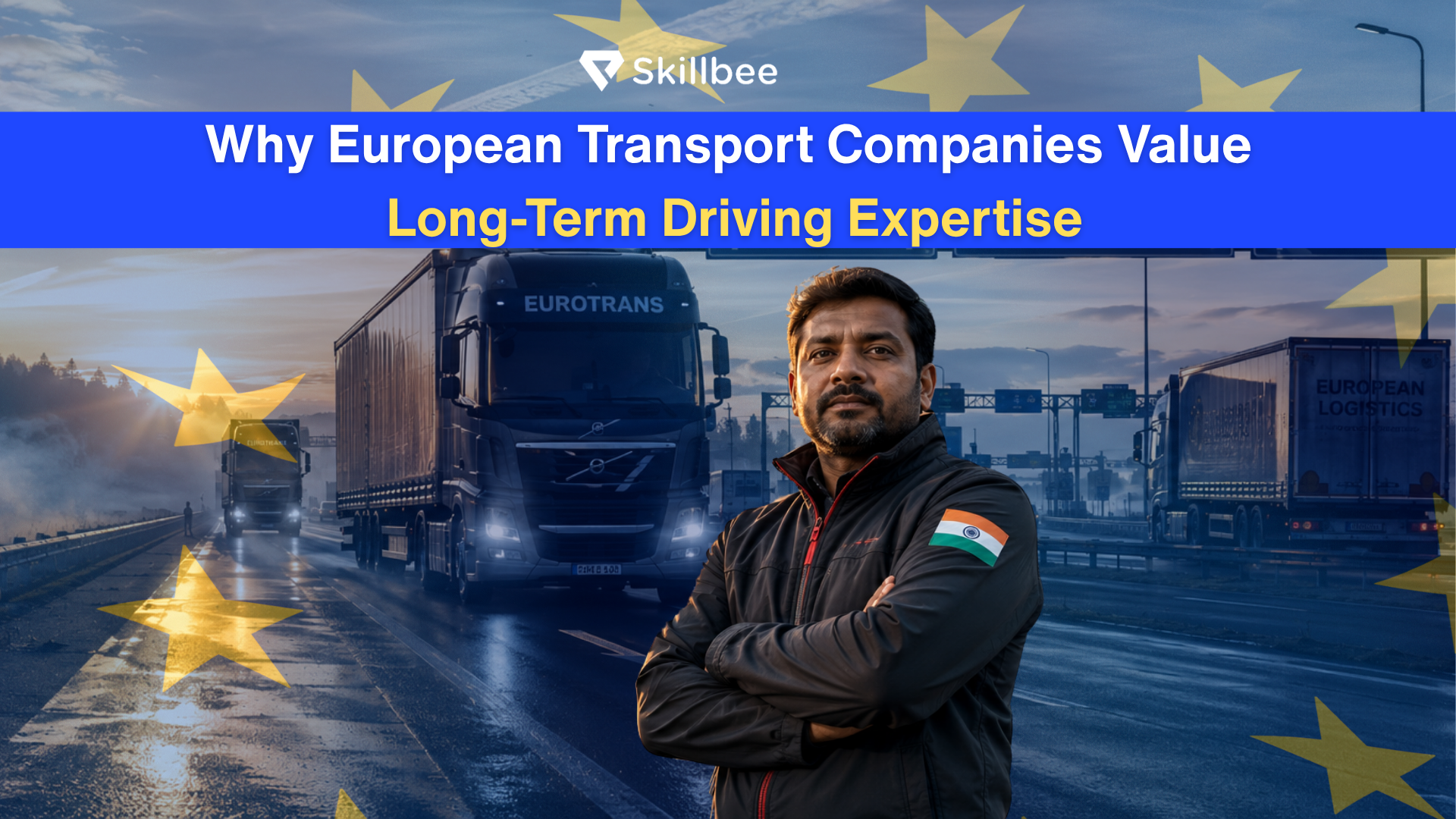
On Long-Haul Drivers Day, Europe pauses to acknowledge the men and women who keep its arteries of trade flowing; the professional drivers who cross borders in the early hours, deliver cargo in harsh winters, and return home just long enough to do it all again. But this recognition is no longer just symbolic. Across the continent, transport companies are realising that experienced long-haul truck drivers are not simply employees; they are competitive assets that determine whether a logistics business thrives or falls behind.
The demand for skilled drivers is rising sharply. According to industry estimates, Europe faces a shortage of over 400,000 truck drivers, a gap that threatens supply chain stability across multiple sectors. Retail, manufacturing, pharmaceuticals, agriculture; virtually every industry that moves physical goods relies on road freight, and road freight relies on people with the expertise to operate it professionally. In this climate, driving experience has evolved from a desirable trait into a defining advantage for freight companies operating internationally.
For transport businesses looking to retain clients, win new contracts, and reduce operational risk, the question is no longer simply whether a driver holds the right licence. It is whether they bring the depth of experience that keeps cargo moving safely, schedules intact, and business relationships strong.
The Human Backbone of European Logistics

Road freight accounts for approximately 75% of all inland freight transport in the EU, making long-haul drivers indispensable to international trade. Whether it is automotive parts moving from Germany to Poland or fresh produce travelling from Spain to Scandinavia, professional drivers are the link that makes cross-border commerce work.
These drivers do not simply operate vehicles. They manage real-time logistics across multiple countries, navigate complex border procedures, communicate with dispatch teams in different languages, and ensure that time-sensitive cargo arrives intact. The daily challenges they face, congested motorways, unpredictable weather, tight delivery windows, and shifting route conditions, demand far more than basic driving ability.
Consider the scale of what a single experienced driver manages over a career. Hundreds of thousands of kilometres across dozens of countries. Deliveries through Alpine passes in winter snow, city centre drops in peak-hour traffic, and remote industrial sites without clear signage. Each of these experiences adds a layer of judgment, adaptability, and confidence that simply cannot be replicated in a classroom or a simulated training environment.
The growing dependence on road freight across Europe means any disruption at the driver level has immediate, measurable consequences for businesses and consumers alike. A delayed shipment does not just inconvenience a warehouse; it can halt a production line, spoil perishable goods, or breach a contractual delivery window. The cost of inexperience, in the European freight context, is rarely trivial.
Practical Knowledge That Cannot Be Taught Overnight

When transport companies say they value experience, they are referring to something specific; a layered understanding of the job that only comes from years on the road.
Route intelligence is one example. An experienced driver does not simply follow GPS instructions. They know which routes are restricted for heavy vehicles, which rest stops are safe and legal, and how to adapt when roads close or weather conditions change without warning. They also understand the unwritten realities of cross-border freight, which crossings move fastest, which customs procedures need extra documentation, and how seasonal traffic patterns affect delivery planning.
Time and pressure management is another. Delivering under tight schedules while remaining compliant with EU driving hour regulations requires discipline that develops over time, not in a training room. A seasoned driver anticipates delays, plans fuel and rest stops efficiently, and communicates proactively when timelines shift. They do not panic when a schedule slips, they adapt, recalculate, and keep the client informed.
Understanding European transport regulations is equally critical. The regulatory landscape across EU member states, covering weight limits, emissions zones, restricted access areas, and mandatory documentation, is detailed and constantly evolving. Experienced drivers carry this knowledge with them, reducing the risk of fines, detentions, or cargo holds that cost companies far more than the original delivery was worth.
Perhaps most critically, experienced drivers can solve problems on the move. A tyre issue in rural Romania, a documentation error at a border crossing, a reroute due to flooding; these situations require composure and judgment that no manual fully prepares you for. Companies that employ drivers with this depth of experience reduce costly delays, protect client relationships, and operate with a level of reliability that newer recruits, regardless of their potential, simply cannot match immediately.
Safer Roads Start with Skilled Drivers

For European logistics firms, safety is not just a moral priority; it is a financial and regulatory one. Accidents involving heavy freight vehicles carry enormous costs: cargo damage, vehicle repair, legal liability, and reputational harm. This is why defensive driving and vehicle inspection awareness are so highly valued in experienced drivers.
Professional drivers with long-haul backgrounds are typically well-versed in:
- Pre-trip and post-trip vehicle checks
- Load securing requirements across different cargo types
- Compliance with EU tachograph regulations and rest period rules
- Safe driving practices in adverse weather and on mountain passes
Regulators across Europe have significantly tightened enforcement of driving-hour compliance in recent years. Companies employing drivers who already understand and respect these rules face fewer fines, fewer fleet downtime incidents, and stronger safety records; all of which directly affect operational profitability.
Experienced drivers reduce risk. That reduction has a tangible monetary value that forward-thinking transport companies understand clearly.
Reliability Creates Long-Term Partnerships

In European logistics, reputation travels faster than any truck. A carrier that consistently delivers on time with professionalism retains clients; one that does not loses them to competitors who do.
This is where experienced drivers become brand ambassadors. Their interaction with warehouse staff, customs officials, and end clients shapes how a transport company is perceived. A driver who communicates clearly, handles valuable cargo responsibly, and maintains composure under pressure does not just complete a delivery; they reinforce a business relationship that may be worth significantly more than the value of any single consignment.
Experienced drivers also understand the importance of responsible cargo handling. They know how to secure loads correctly, identify signs of damage before departure, and complete the necessary documentation that protects both the carrier and the client in the event of a dispute. This attention to process is not bureaucratic caution; it is the kind of professional discipline that logistics managers and procurement teams look for when awarding long-term freight contracts.
For logistics companies managing international B2B contracts, the reliability and consistency that experienced drivers bring is a direct input to customer confidence and contract renewal. Long-term partnerships are built not just on price, but on trust; and trust is earned delivery by delivery, driver by driver.
Experience Meets Digital Logistics

The modern freight industry has changed dramatically. Today’s trucks are equipped with GPS fleet tracking systems, digital tachographs, real-time cargo monitoring, and telematics dashboards that generate continuous data about driver behaviour and vehicle performance.
Some assume that younger, tech-native drivers adapt better to these systems. The reality is more nuanced. Experienced drivers bring something equally important: they understand why these systems exist and how to use them in the service of safety and compliance, not around them.
A driver who has managed routes manually for years grasps the value of GPS optimisation quickly. One who has logged rest hours on paper understands digital tachograph compliance instinctively. As smart fleet management technologies become standard across European logistics, companies increasingly find that experience and digital adaptation complement each other; experienced drivers adopt new tools purposefully, not reluctantly.
Europe’s Driver Shortage and the Rise of International Recruitment
Europe’s driver shortage is structural, not temporary. An ageing driver workforce, high attrition, and insufficient new entrants mean the gap will persist and likely widen through this decade.
To address this, European transport companies are increasingly recruiting skilled international drivers from countries including India, Pakistan, the Philippines, and across the Middle East and North Africa. These markets offer large pools of professionally trained drivers with significant experience in long-haul operations, often on routes demanding similar endurance and regulatory awareness to European standards.
For experienced drivers from these regions, Europe represents a significant professional opportunity. Skilled trailer driver jobs abroad, particularly across Germany, the Netherlands, Poland, and Scandinavia, offer competitive pay, structured working conditions, and long-term career pathways.
This international recruitment trend is not a stopgap. It is becoming a core part of European freight workforce strategy, with drivers from international markets increasingly filling critical operational roles that domestic hiring alone cannot satisfy.
Celebrating Dedication, Discipline, and Commitment

Long-Haul Drivers Day offers a moment of formal acknowledgement. But drivers who spend weeks away from home, navigate foreign regulations, manage physical fatigue, and deliver with precision deserve recognition that extends well beyond a single calendar date.
The sacrifices are real: missed family events, disrupted sleep cycles, the isolation of long stretches of motorway through unfamiliar countries, and the mental load of remaining alert, compliant, and professional regardless of conditions. The discipline required to maintain that standard, consistently, over a career spanning decades, is not ordinary. It is exceptional.
Transport companies that invest in driver wellbeing and career development, through fair pay structures, access to quality rest facilities, mental health support, and clear pathways for professional progression, are not simply fulfilling an HR obligation. They are protecting their most operationally critical resource and creating the kind of workplace culture that attracts and retains the experienced talent the industry is already struggling to find.
For drivers considering international opportunities, particularly those from markets such as India, Pakistan, and the Middle East, the message from European transport is increasingly clear: your experience is valued, your skills are needed, and the industry wants professionals who can contribute at the highest level from day one.
The future of European logistics will be shaped by autonomous technologies, greener fleets, and tightening regulatory frameworks. But for the foreseeable future, it will still depend on the expertise, dedication, and professionalism of the men and women behind the wheel, people who know how to move cargo safely, reliably, and consistently across one of the world’s most complex freight environments.
Experienced long-haul drivers are not simply filling seats in a cab. They are holding supply chains together, protecting business relationships, and enabling the kind of operational reliability that European logistics companies compete on. Those who recognise this and invest in the people who make it possible will be best placed to lead the industry forward.
Conclusion
As Europe’s logistics sector continues to expand, the value of experienced long-haul truck drivers has never been clearer. Their ability to manage complex international routes, maintain safety standards, handle pressure, and deliver consistently makes them one of the most important assets in modern transport operations. While technology and automation continue to transform the industry, the expertise, judgment, and professionalism that experienced drivers bring to the road remain irreplaceable.
With the growing shortage of qualified drivers across Europe, international recruitment is becoming an essential part of the industry’s future. This is where companies like Skillbee are playing an important role in connecting skilled talent with European transport opportunities. Skillbee recruits experienced truck and trailer drivers from India, the Middle East, and South Africa for transport roles across Europe, supporting companies that are actively seeking reliable professionals for long-haul operations.
To better prepare drivers for European logistics environments, Skillbee has also established dedicated training centres and introduced EU truck simulators that allow drivers to gain practical exposure before beginning their international careers. Beyond recruitment, the Skillbee team supports candidates throughout the documentation process, provides career counselling, and offers English language training to help drivers adapt confidently to international workplaces and communication standards. As the transport industry moves forward, companies that invest in experienced drivers, proper training, and long-term workforce development will be better positioned to build reliable supply chains and stronger business relationships across Europe.
 +971 52 119 7025 (UAE)
Leave a Reply